
Flatbed trucking on the West Coast
Lifetime Logistics Services LLC covers flatbed trucking on the West Coast and across the Southwest from its base in Covina, California, with partner carriers it vets before every load. Our dispatch records show flatbed loads on a range of western lanes, most of them picking up in the Phoenix area and in California and delivering to San Diego County, the Salinas Valley, Los Angeles, northern Nevada and the El Paso area. Send the quote form with the dimensions and the weight, and we will price the lane.
From our dispatch records, January through September 2026
- How often we run it
- Several loads a week
- Who hauls it
- Partner carriers
- Drop trailers
- Rare
Where our flatbeds actually run
Flatbed made up roughly one load in eight of everything we moved in the nine months to September 2026. More than half of those loads originated in the Phoenix area, which makes Arizona our flatbed home market. From Phoenix the two steady lanes are west on Interstate 8 to San Diego County, which our flatbed partners run for us regularly, and northwest to the Salinas Valley farm belt on the Central Coast, nearly 700 miles and every bit as regular. Inside California our flatbed loads left the Salinas Valley for Los Angeles County and over the Sierra to northern Nevada, from the Modesto area down to Los Angeles, and from the Inland Empire east to west Texas around El Paso.
What those lanes have in common is distance and open country. A flatbed load from Phoenix to the Central Coast crosses two deserts, a mountain range and the Salinas Valley wind, and the tarp and securement choices made at the pickup decide whether it arrives clean.
How we source the right deck
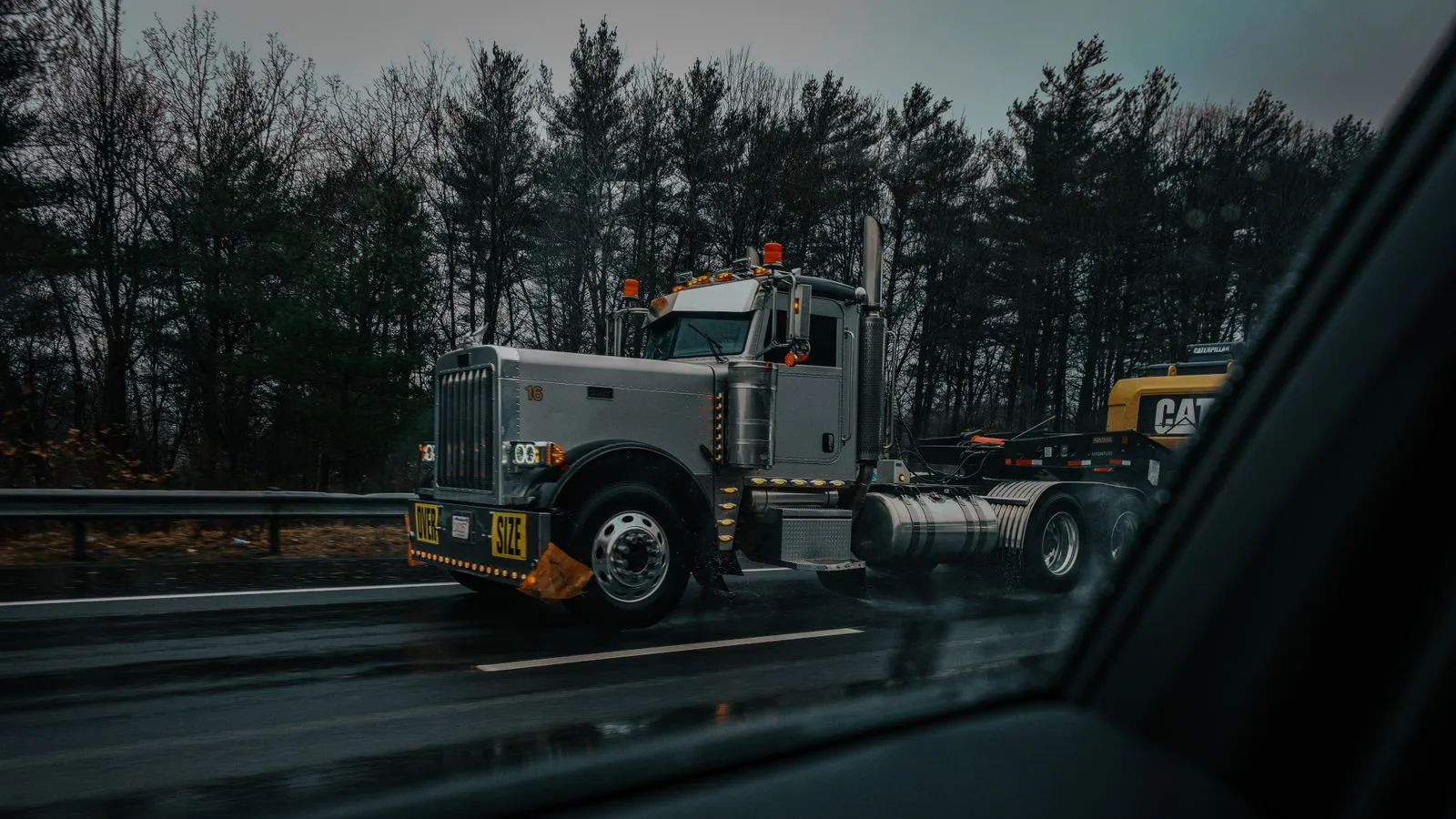
Our own fleet is 53 foot dry vans, so every flatbed load is handed to a partner carrier operating under our broker authority. We state that plainly because it tells you what we do and do not control. What we do is match the deck to the piece: a standard flatbed for freight up to about eight and a half feet in height, a step deck for pieces up to about ten feet, an RGN or double drop for taller or heavier equipment. We confirm the carrier has the straps, chains, edge protection and tarps the load needs, check the carrier through Highway for identity, authority and insurance, and manage the load from pickup to proof of delivery.
Flatbed carriers are fewer than van carriers in every western market, and they cluster around the industrial work: Phoenix, the Inland Empire, the Central Valley, the Bay Area, Portland and the Puget Sound. On the lanes we run regularly, we already know which carriers are positioned where. On a lane we run rarely, we will tell you that we are sourcing fresh and what that means for notice.
Routes, passes and the things a flatbed load has to plan around
Between Southern California and the rest of the West there are a handful of chokepoints that matter more to an open deck load than to a van. Interstate 8 between the Imperial Valley and San Diego climbs to about 4,000 feet and is shut to high profile vehicles when the wind is strong. Interstate 10 across the desert gets dust storms in late summer. Interstate 5 over the Siskiyou Summit and Interstate 80 over Donner Pass require chains in winter, and a tarped load in a snowstorm is a different job from a dry one. Interstate 15 over the Cajon Pass closes for fire and wind, and the descent to Primm is hard on brakes with a heavy deck.
California also has its own rules. A truck working in the state must meet California emissions requirements, which rules out some out of state flatbed carriers before the quote is even written, and oversize permits in the Los Angeles basin come with travel time restrictions that push a wide load into the night or the early morning.
What moves on West Coast flatbeds
The open deck freight we see most is building and industrial: steel, crated machinery, electrical equipment, pipe and conduit, packaged lumber, pallets of block and stone, and the equipment behind data center and energy builds covered in the rest of this section. Much of it is heavy for its size, which means the weight distribution on the deck matters as much as the securement, and the receiver needs a forklift or a crane that can take it off.
Our records do not tag commodities, so we describe the trailers rather than the products. If you ship open deck freight on a West Coast lane on a recurring basis, tell us what it is and we will say plainly whether it is something we cover routinely.
Getting a flatbed quote
- The largest piece's length, width and height, plus the total weight
- How it gets on and off: side forklift, overhead crane, or ramps
- Whether it needs tarps, and whether it can get wet between pickup and delivery
- Any dimension over eight and a half feet wide, about fourteen feet tall on the trailer, or over 48,000 pounds, which means a permit
- Pickup and delivery hours, and whether either end is a construction site
Questions shippers ask
- Do you have your own flatbed trucks?
- No. Every trailer we own is a 53 foot dry van. Flatbed freight rides with partner carriers that we vet through Highway and manage from booking to delivery.
- Where do most of your West Coast flatbed loads run?
- Phoenix into San Diego County and Phoenix up to the Salinas Valley are both regular open deck lanes for our partner carriers. We also cover open deck loads out of the Salinas Valley into Los Angeles and northern Nevada, from the Modesto area down to Los Angeles, and from the Inland Empire out to west Texas.
- Can you run a flatbed from Los Angeles to Seattle?
- Yes, through a partner carrier. Our Inland Empire to Seattle loads are mostly power only, with dry vans several times a year, so a flatbed on that lane is sourced for your date rather than drawn from a standing pattern, and a few days of notice helps.
- What is the difference between a flatbed and a step deck?
- A flatbed has a single deck roughly five feet above the road, so its freight can stand about eight and a half feet high. A step deck has a lower rear deck, which gives about ten feet of height for taller pieces such as chillers and generator enclosures.
Ready to price a load?
Send the quote form or call us. A person on our team replies with a price.